TRT can make a real difference if you have low testosterone. But it's not something to jump into without doing your homework first. Here's what you should know before getting started.
Getting a Proper Diagnosis
Low testosterone (hypogonadism) isn't diagnosed off a single blood test or a list of symptoms. You need:
- Two separate morning testosterone tests showing consistently low levels (AAFP guidelines).
- An evaluation for underlying causes, like thyroid issues or sleep apnea, to make sure TRT is actually the right call (Mayo Clinic).
Common Symptoms of Low Testosterone
These are the typical signs that prompt men to get tested:
- Reduced libido or sexual dysfunction
- Chronic fatigue and low energy
- Mood issues (depression, irritability)
- Loss of muscle mass, increased body fat
- Cognitive difficulties (focus, memory)
That said, symptoms alone don't confirm low T. You need the bloodwork to back it up (Cleveland Clinic).
TRT Treatment Methods
There are a few ways to take testosterone:
- Injections: Usually weekly or bi-weekly, administered intramuscularly or subcutaneously. Most common method.
- Topical gels or creams: Applied daily. Convenient but you need to be careful about skin-to-skin transfer.
- Patches: Daily transdermal absorption. Can cause skin irritation for some guys.
- Implantable pellets: Inserted every 3-6 months for a sustained release (TRT Monitor Beginner's Guide).
Which one suits you depends on your lifestyle, preferences, and how you respond to each method.
Tests You Should Get Before Starting
Before you start TRT, get a proper baseline. This makes it much easier to assess whether the therapy is actually working down the line:
- Total and Free Testosterone
- LH and FSH (helps identify the cause)
- PSA (prostate-specific antigen)
- Hematocrit and hemoglobin
- Estradiol (E2)
- Liver enzymes and lipid profile (Complete TRT Blood Work Schedule)
Risks and Side Effects
Most side effects are manageable:
- Acne or oily skin
- Mild fluid retention
- Mood fluctuations
- Testicular shrinkage
The more serious risks are less common but worth knowing about:
- Polycythemia (high red blood cells)
- Prostate enlargement or complications
- Worsened sleep apnea
- Potential cardiovascular impact (TRT Side Effects Management)
Regular bloodwork is how you catch these early. Don't skip your monitoring.
Fertility and Family Planning
This is a big one. TRT typically suppresses your natural testosterone production and can reduce or stop sperm production. If you're planning to have kids (or might want to in the future), talk to your doctor about options like hCG supplementation or sperm banking before you start (Cleveland Clinic Fertility).
Monitoring Once You're On TRT
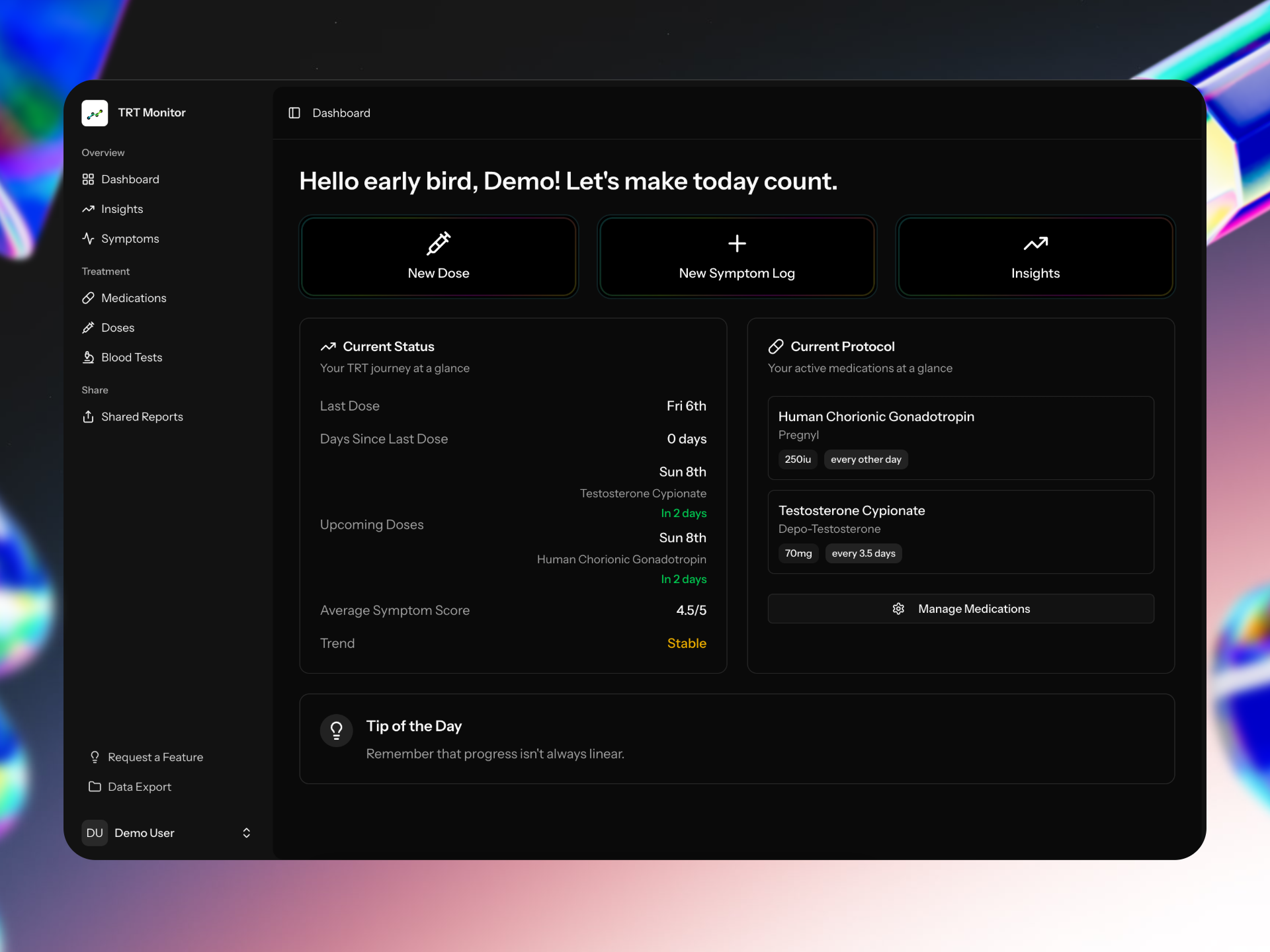
Starting TRT isn't a "set it and forget it" thing. You need regular blood tests, ongoing symptom tracking, and check-ins with your doctor to make sure things are on track. Tools like TRT Monitor help you keep your injections, symptoms, and lab results organised in one place, which makes those doctor conversations a lot more productive.
Questions to Ask Your Doctor
Go to your appointment with a list. Some good ones:
- What's causing my low testosterone?
- What are the benefits and risks specific to my situation?
- How will TRT affect my fertility?
- How often should I get bloodwork done?
- Should I try lifestyle changes first, or alongside TRT?
Wrapping Up
TRT is a long-term commitment, not a quick fix. Make sure you've got a confirmed diagnosis, understand the treatment options and side effects, and have a plan for regular monitoring. With the right approach - and good tools to track your progress - you'll be in a much better position to get the most out of it.