Starting testosterone therapy can feel like stepping into the unknown. But with the right tools and a bit of awareness, you can turn that uncertainty into something manageable pretty quickly.
TRT isn't just about getting your injections right. It's about understanding how your body responds. If you keep track of things like injection timing, dosage, mood, and sleep, you'll start to spot patterns, make better decisions about your protocol, and generally feel less like you're flying blind.
This post covers what to track, why it matters, and how TRT Monitor can help.
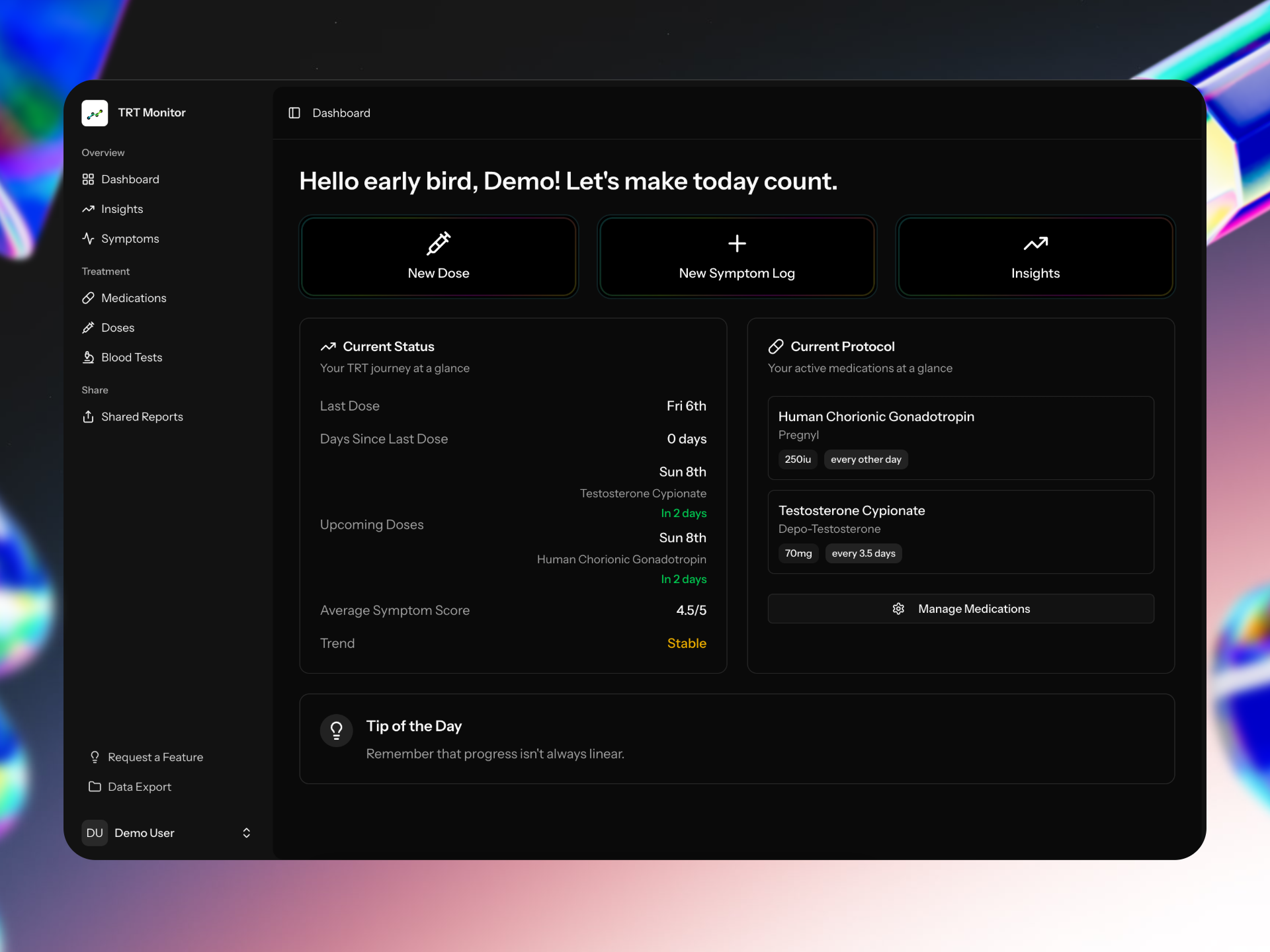
The TRT Monitor dashboard gives you a clear view of your injections, symptoms, and progress - everything that matters, in one place.
Why Tracking Your TRT Matters
A lot of men start TRT expecting instant results, but consistency is everything. Missing a dose, injecting late, or forgetting which compound you used can lead to unstable hormone levels.
When your testosterone fluctuates, you might notice:
- Mood swings or irritability
- Energy crashes mid-week
- Restless nights or poor sleep
- Inconsistent libido and focus
When you track consistently, you start connecting the dots. Maybe your mood dips on day six after an injection. Maybe poor sleep follows dose changes. That kind of insight gives you (and your clinician) the context to adjust things before small issues snowball.
What isn't measured can't be managed. Tracking turns vague feelings into data you can actually use.
What to Track on TRT
You don't need to overwhelm yourself with numbers. The goal is a clear picture of how therapy affects you day to day.
Here's what's worth logging from day one:
Injections
- When you inject: Dates and times help you stay consistent.
- What you inject: The compound (cypionate, enanthate, blend, etc.).
- How much: Dose in mg or ml per shot.
- Where: Injection site and side (optional but useful for rotation).
Keeping this data helps you avoid missed or double doses and makes it easier to see how your schedule impacts how you feel.
Daily Symptoms
Your subjective experience matters just as much as lab numbers. Track:
- Mood and motivation
- Energy and focus
- Libido and sexual function
- Sleep quality
- Anxiety, irritability, or "flat" days
Over time, you'll start seeing correlations. Lower mood the day before your next injection. Better sleep after adjusting your frequency. That sort of thing.
Blood Work
Blood tests confirm whether your protocol is working safely. Log markers like:
- Total and Free Testosterone
- Estradiol (E2)
- SHBG
- Hematocrit
- Cholesterol and liver enzymes
Having all your results in one place makes it easier to monitor trends and share clean data with your clinician.
Injection Frequency and How It Affects You
Not all injection schedules feel the same. Weekly injections are common, but spacing them too far apart can create peaks and troughs - you feel great for a few days and then crash before your next dose.
More frequent dosing (twice weekly or every 3-4 days) often produces steadier levels, which means fewer mood swings and more consistent sleep. Tracking helps you figure out which schedule works best for you.
With TRT Monitor, you can review your symptom scores alongside injection dates and see how different timing patterns affect your stability.

Tracking injection dates, doses, and types helps you stay consistent and reduce hormonal fluctuations.
How TRT Monitor Makes It Simple
Trying to manage your therapy in a spreadsheet or notebook gets messy fast. TRT Monitor was built to take the hassle out of tracking.
With the app, you can:
- Log injections in seconds and get reminders for the next one.
- Record daily symptoms like mood, sleep, and energy.
- View blood test history over time to track changes.
- Spot trends automatically - no more guesswork.
Everything is private, secure, and built specifically for TRT users. Whether you're new to tracking or refining a protocol you've been on for years, it keeps your therapy organised and easy to review.
Why It's Worth Doing
When you track, you stop guessing and start understanding. You'll know:
- What dose and frequency keep you feeling best
- How lifestyle factors (sleep, diet, stress) influence your symptoms
- Whether lab results actually line up with how you feel
It's the difference between reacting to problems and understanding what causes them.
TRT works best when you stay consistent and pay attention. Tracking gives you that foundation, and the more data you collect, the easier it gets to dial things in.
Bottom line: Starting TRT is a commitment, but it doesn't have to be complicated. With the right approach and the right app, you can stay on top of your therapy and actually understand what's working.
Start tracking your TRT with TRT Monitor