TRT can make a big difference to how you feel, but it does come with potential side effects. Most are manageable once you know what to look out for and how to handle them.
Common Side Effects & What to Do
Most men run into a few of these, especially in the first weeks or months:
- Acne and oily skin: A decent skincare routine helps. If it's bad, a dose adjustment might be needed.
- Fluid retention: Usually temporary. Cut back on salt and give your levels time to stabilize.
- Mood changes: Often tied to hormone fluctuations. Splitting your dose into more frequent injections can smooth things out.
- Gynecomastia: Keep an eye on your estradiol. Adjusting dose or injection frequency usually helps.
- Testicular shrinkage: Mostly a cosmetic concern. hCG can prevent or reverse it if it bothers you (Mayo Clinic).
More Serious Risks
These are less common but worth knowing about:
- Polycythemia (high red blood cells): Regular blood tests catch this early. If hematocrit gets too high, donating blood or a therapeutic phlebotomy brings it down.
- Prostate enlargement: Routine PSA checks and paying attention to urinary symptoms.
- Sleep apnea: Can worsen on TRT. If you already have it, make sure it's being treated.
- Cardiovascular risks: Stay on top of cardio, diet, and regular check-ups.
- Blood clots: Keep active and monitor your hematocrit (American Family Physician).
Regular monitoring catches most of these before they become a problem (TRT Monitor Blood Work Schedule).
The Role of Regular Monitoring
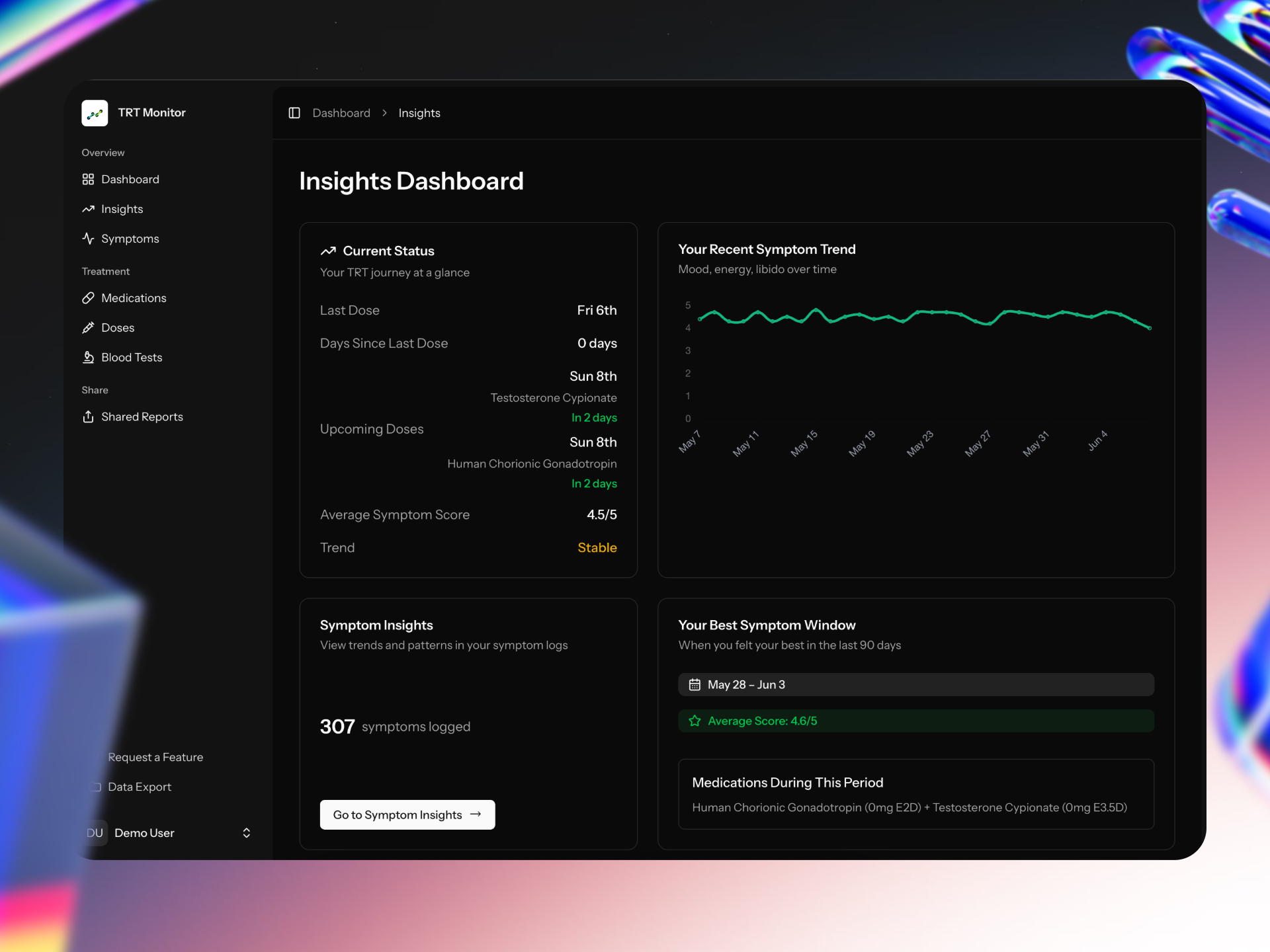
Managing side effects comes down to two things: regular bloodwork (total testosterone, estradiol, hematocrit, PSA) and paying attention to how you feel. TRT Monitor makes both of these easier by putting your labs and symptoms in one place so you can see trends over time.
Managing Estradiol (E2)
Keeping estradiol in check helps avoid issues like gynecomastia, bloating, and mood swings. Most of the time, adjusting your TRT dose or injecting more frequently brings estradiol back in line without extra medication. Aromatase inhibitors work but should be a last resort - use them only when you're actually symptomatic (PubMed).
When to Get Medical Help Immediately
Don't mess around with these - see a doctor straight away if you notice:
- Severe leg swelling (could be a clot)
- Chest pain or difficulty breathing
- Sudden urinary problems
- Signs of liver issues (jaundice, severe abdominal pain)
Lifestyle Factors That Help
Good habits make TRT safer and more effective:
- Eat a reasonable diet
- Do regular cardio
- Keep an eye on your weight and blood pressure
- Go easy on the alcohol
Wrapping Up
Side effects on TRT are real but usually manageable. Most of the common ones sort themselves out with minor adjustments to your protocol. The key is staying on top of your bloodwork, tracking how you feel, and talking to your doctor when something's off. Tools like TRT Monitor help you keep all of that organised without much effort.