Managing TRT isn't just about how you feel - it's about what's happening under the hood.
Whether you're working with a clinic or doing it yourself, routine blood work keeps your protocol safe and on track. But a lot of men aren't sure what to test or how often to do it.
Here's a no-nonsense guide to which labs matter and when to get them done.
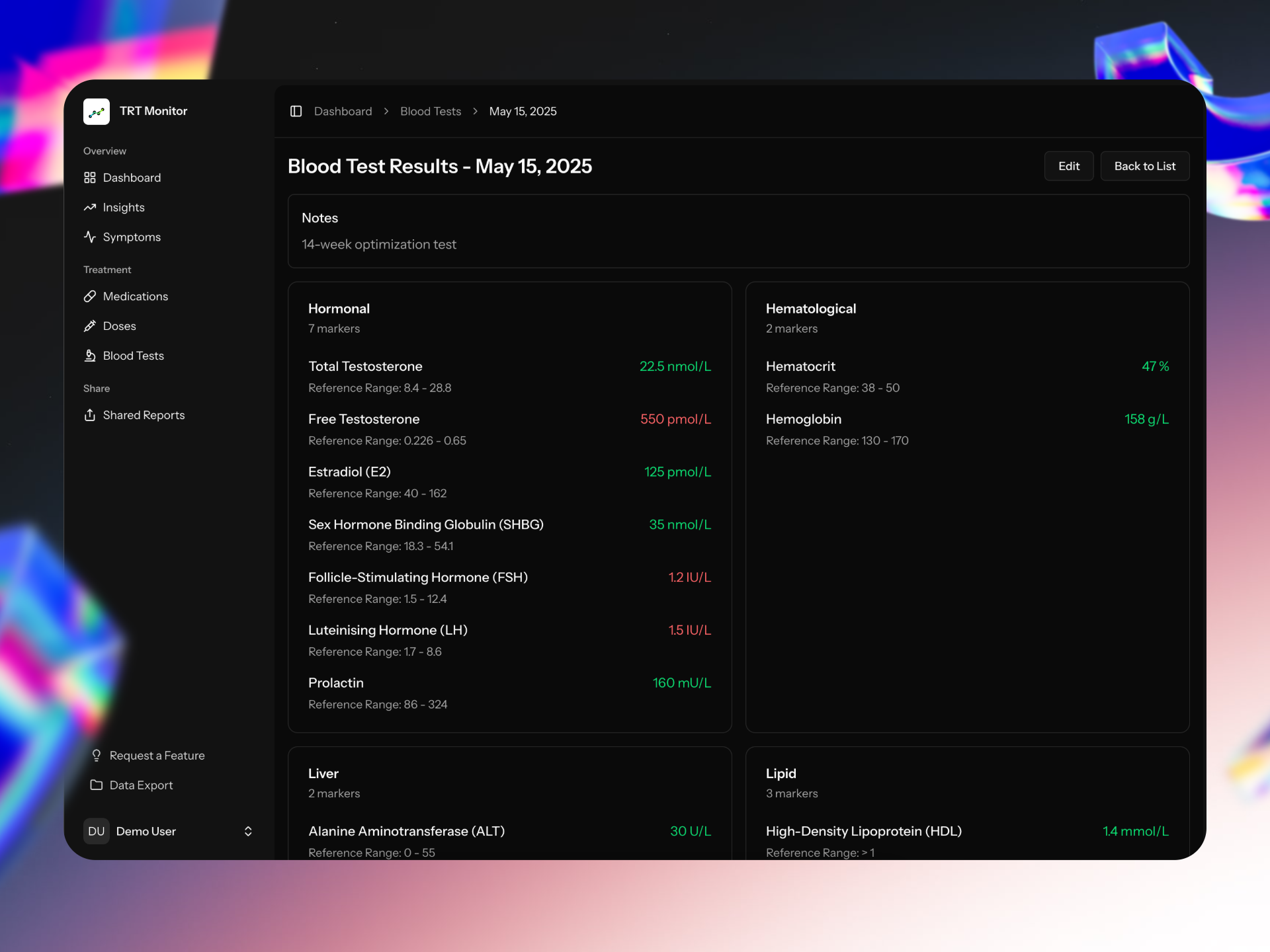
The Core Blood Work Checklist
These are the tests most men on TRT should be running regularly (AAFP).
Total Testosterone
- Confirms your dose is putting you in range
- When to test: Before starting, 6-8 weeks after any change, and every 6-12 months
Free Testosterone
- Shows how much testosterone your body can actually use
- When to test: Same schedule as Total T
Estradiol (E2)
- Tracks how much testosterone is converting to estrogen
- Affects mood, libido, and water retention (PubMed)
- When to test: With every protocol change and at least every 6-12 months
Hematocrit & Hemoglobin
- Picks up blood thickening, which raises blood pressure and clot risk
- When to test: Every 3-6 months (Cleveland Clinic)
SHBG (Sex Hormone-Binding Globulin)
- Affects how much Free T is actually available
- When to test: At baseline, and again if your symptoms don't match your numbers
PSA (Prostate-Specific Antigen)
- Monitors prostate health (mainly relevant for men over 40)
- When to test: Baseline and annually
Lipid Panel (Cholesterol)
- TRT can shift your LDL, HDL, and triglycerides
- When to test: Baseline, then yearly (Mayo Clinic)
Liver Enzymes (ALT, AST)
- Checks for liver stress from TRT or other meds
- When to test: Baseline and as needed (MedlinePlus)
A Sample Testing Timeline
For most guys, this works well:
- Before starting TRT - Full panel
- 6-8 weeks after starting or changing dose - Recheck Total T, Free T, E2, and hematocrit
- Every 6-12 months - Full panel to keep tabs on everything
If you're running a more aggressive protocol or have a history of high hematocrit or estrogen issues, testing every 3-4 months is a better idea.
How to Prepare for Your Lab Draw
- Go in the morning - between 7-10am is best (MedlinePlus)
- Fast for 8-12 hours - especially for accurate lipid results (CDC)
- Skip the heavy lifting the day before - it can temporarily throw off liver enzymes
- No sex for 24-48 hours - this can affect PSA readings (Cleveland Clinic)
These small things help make sure your results reflect reality rather than what you did the night before.
What If My Symptoms Don't Match My Labs?
This is more common than you'd think.
Some men feel great with low-normal testosterone. Others feel flat even with high numbers. That's why symptom tracking matters just as much as blood work. The numbers are useful, but they're not the whole story.
Most good TRT doctors agree: treatment should be guided by both labs and how you actually feel (Cleveland Clinic).
Tip: Keep Everything in One Place
Trying to manage all this in your head or a spreadsheet gets old fast. That's why we built TRT Monitor.
It lets you:
- Log your blood test results
- Track your symptoms alongside your labs
- Spot patterns between dose timing and how you feel
You can also generate a filtered report with one click to share with a clinic or forum.
Final Thoughts
TRT isn't "set it and forget it." You don't need to obsess over every number, but knowing when to test and why helps you catch problems early and keep things running smoothly.
If it's been a while since your last labs, go get them done. It takes an hour and gives you peace of mind.
Want to stay on track? Sign up and start logging your labs and symptoms today.