More men are getting diagnosed with low testosterone and looking into TRT as a treatment. If you're just starting to learn about it, here's a straightforward overview of what TRT is, how it works, and what to expect.
What is Testosterone Replacement Therapy?
TRT is a medical treatment that raises testosterone levels in men with clinically low testosterone (hypogonadism). It's not an anti-aging hack or a performance enhancer - it's for guys whose levels are genuinely low. Testosterone naturally drops by about 1% per year after age 30 (Healthline).
Testosterone plays a role in:
- Muscle mass and strength
- Bone density
- Fat distribution
- Red blood cell production
- Sex drive
- Mental clarity and mood
When your levels drop below normal, TRT brings them back up to where they should be.
Common Symptoms of Low Testosterone
Most men look into TRT after dealing with some combination of:
- Constant tiredness that sleep doesn't fix
- Low sex drive
- Erectile dysfunction
- Losing muscle despite training
- Gaining body fat, especially around the middle
- Feeling down or irritable
- Brain fog
- Poor sleep
If several of these sound familiar, it's worth getting your testosterone checked with a blood test.
TRT Treatment Methods
There are a few ways to get testosterone into your system:
Injections
The most common method. You inject testosterone cypionate or enanthate into muscle or subcutaneous fat, usually every 1-2 weeks (MyFitMed). Many men prefer this because it's effective and you know exactly what dose you're getting.
Topical Gels and Creams
Applied to the skin daily. Less invasive than needles, but you need to be careful about skin-to-skin transfer to partners or children (Cleveland Clinic).
Patches
Applied daily to the skin. Gives a steady release but can cause skin irritation.
Pellets
Small pellets implanted under the skin that release testosterone slowly over 3-6 months. Convenient but less flexible if you need dose adjustments.
Benefits of TRT
When it works, TRT can make a real difference. Studies show improvements in libido, energy, mood, muscle strength, and bone density (PubMed). The Cleveland Clinic notes that consistent TRT improves sex drive, mood, and energy in men who are genuinely testosterone deficient (Cleveland Clinic).
It's not magic, but for men who actually need it, the difference can be night and day.
Monitoring Your TRT
You can't just start TRT and forget about it. You need regular blood tests - typically at 3-6 months after starting, then annually. The key things to track (American Family Physician):
- Total and free testosterone levels
- Estradiol (estrogen - testosterone converts to it)
- Hematocrit and hemoglobin (red blood cell levels)
- Lipid panel
- Prostate-specific antigen (PSA)
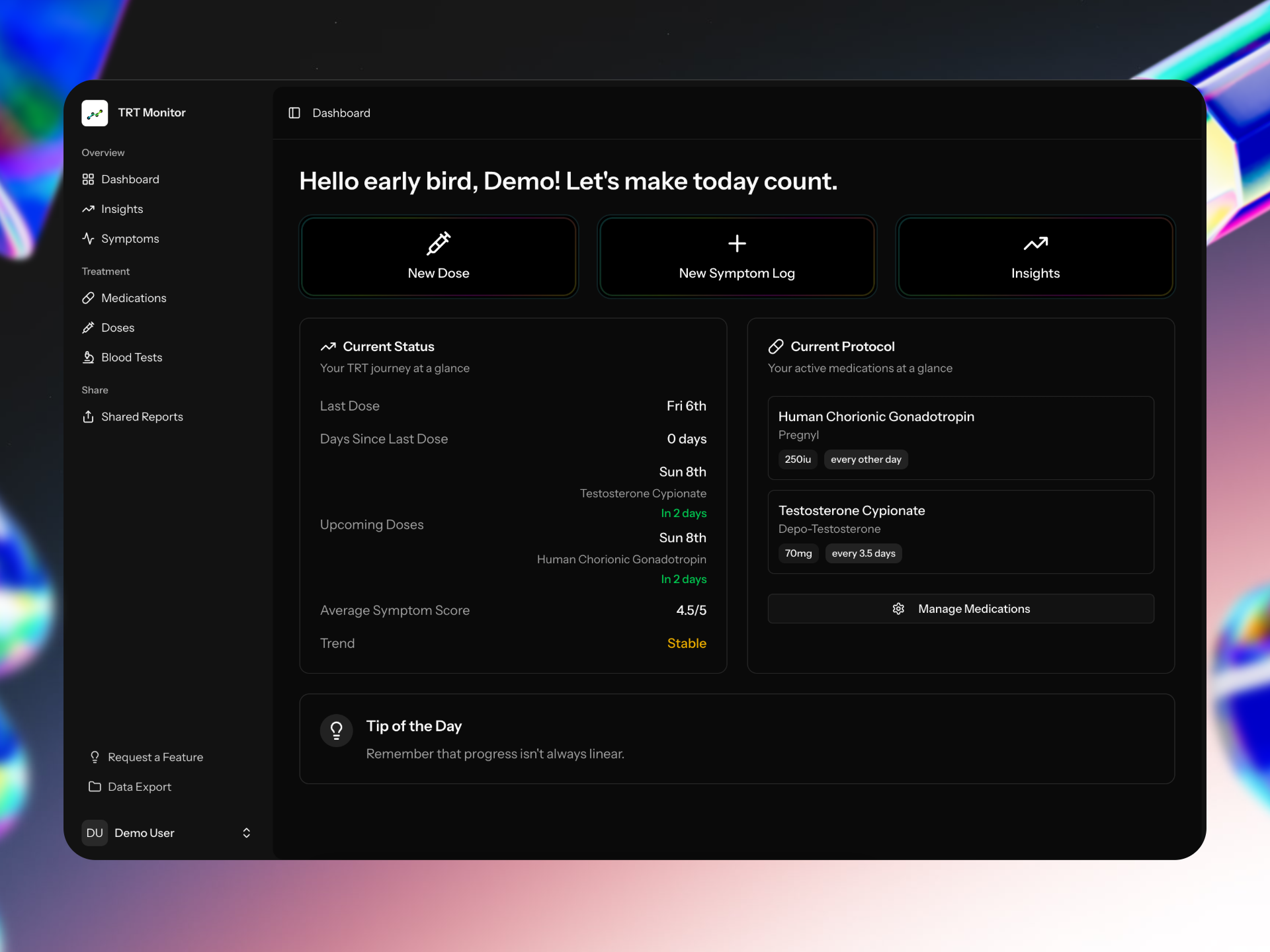
Tracking your symptoms alongside your bloodwork gives you the full picture. Numbers alone don't tell you everything - how you feel matters too. The TRT Monitor app is built for exactly this.
Potential Side Effects
TRT isn't without downsides. Possible side effects include (Mayo Clinic):
- Increased red blood cell count (polycythemia)
- Acne or oily skin
- Fluid retention
- Breast tissue growth (gynecomastia)
- Testicular shrinkage and reduced fertility
- Mood swings
- Worsening of sleep apnea
- Prostate growth
TRT can also raise estradiol levels through aromatization, especially in men with more body fat. This can cause bloating or mood changes (PubMed). Regular monitoring and working with your doctor keeps these risks in check.
Further Reading
For more detail on the benefits and risks, check out the Mayo Clinic's TRT overview or the Cleveland Clinic's guide to male hypogonadism.
The Bottom Line
For men with genuinely low testosterone, TRT can make a huge difference to energy, mood, body composition, and quality of life. It does require proper medical supervision, the right dose, and regular monitoring - but when those pieces are in place, most men are glad they started.
If you think you might have low T, talk to a doctor who knows their way around hormone therapy. Get your blood tested first, then go from there.
References and Further Reading:
- Testosterone Replacement Therapy Overview (Healthline)
- Testosterone therapy: Potential benefits and risks (Mayo Clinic)
- Optimizing Testosterone Injection Frequency (MyFitMed)
- American Family Physician - Testosterone Therapy
- Low Testosterone: Symptoms & Treatment (Cleveland Clinic)
- Estrogens in Men: Clinical Implications (PubMed)
- Risks of Testosterone Replacement Therapy (PubMed)