Your TRT protocol needs to be dialled in for you. What works for someone else might leave you feeling flat, bloated, or wired. This guide covers how to adjust your dosage and frequency to get the best results with the fewest side effects.
Why Personalization Matters
Everyone responds differently to testosterone. Your sweet spot depends on things like:
- Age
- Body composition
- Metabolism
- Sex hormone-binding globulin (SHBG) levels
- Genetics
- Pre-existing health conditions
- What you're actually trying to achieve
Getting your protocol right usually means making careful adjustments over time and paying close attention to both your labs and how you feel day to day.
Injection Frequency
How often you inject has a big impact on how stable you feel. Testosterone cypionate, one of the most common esters, has a half-life of roughly 8 days (MyFitMed). Here's how the main options stack up:
Weekly Injections
- Pros: Fewer jabs, simple schedule
- Cons: Bigger peaks and troughs, which can mean more side effects
Twice Weekly Injections
- Pros: More stable levels, often fewer side effects (MyFitMed)
- Cons: More frequent injections, slightly more to keep track of
Every Other Day (EOD)
- Pros: Very stable hormone levels, minimal fluctuations
- Cons: Lots of injections, harder to stay consistent
A lot of men find that splitting their weekly dose into 2-3 smaller injections keeps levels steadier and reduces issues like mood swings and water retention (ExcelMale).
Finding Your Optimal Dose
Typical TRT dosages fall between 100-200 mg per week, aiming for mid-normal testosterone levels (roughly 400-700 ng/dL) per clinical guidelines (American Family Physician). Where you land depends on:
- Your baseline testosterone levels
- Your metabolism and SHBG levels
- How much you aromatize (convert testosterone to estrogen) (PubMed)
- How you actually feel
Start low and adjust based on bloods and symptoms. More isn't always better - sometimes dropping the dose or changing injection frequency makes a bigger difference than adding more testosterone.
Tracking Key Metrics
To dial things in properly, you need to track both your labs and your symptoms.
Laboratory Values
- Total testosterone (trough levels, drawn just before your next injection)
- Free testosterone (especially if your SHBG is high or low)
- Estradiol (E2), particularly if you're having symptoms (PubMed)
- Hematocrit and hemoglobin (for polycythemia)
- Lipid panel (cardiovascular risk)
- Prostate-specific antigen (PSA)
How You Feel
- Energy levels
- Mood stability
- Libido
- Sleep quality
- Exercise recovery
- Mental clarity
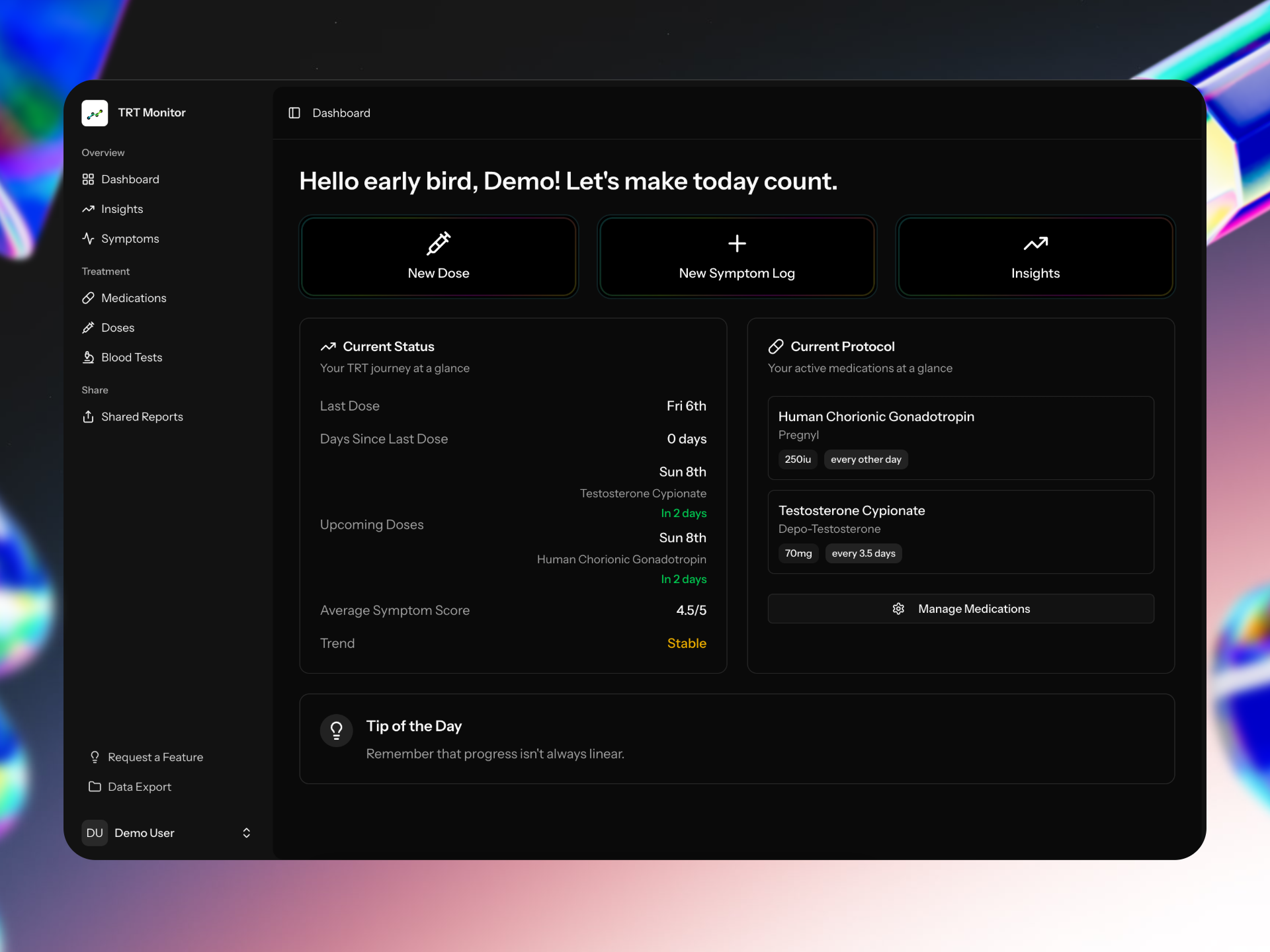
Something like TRT Monitor makes it easier to spot patterns between protocol changes and how you're actually feeling.
SHBG and Why It Matters
SHBG has a big effect on how your body uses testosterone. If your SHBG is on the lower side, you may do better with smaller, more frequent doses to avoid burning through testosterone too quickly and getting big swings (ExcelMale). Knowing your SHBG helps you understand why a protocol that works for someone else might not work for you.
Adjunct Therapies
Some men add other medications alongside testosterone:
- Aromatase inhibitors (AIs) - Can help manage high estradiol, but should only be used when you're actually symptomatic. They're overprescribed (PubMed).
- hCG (human chorionic gonadotropin) - Keeps testicular function going and preserves fertility. Prevents the shrinkage that comes with TRT (Male Infertility Guide).
- DHT blockers - Sometimes used for hair loss, but they come with their own trade-offs and need monitoring.
Any adjunct therapy should be discussed with your doctor and matched to your specific situation.
Estradiol Management
Worth a quick mention on its own. Men carrying more body fat tend to aromatize more, converting testosterone into estradiol. This can cause bloating, mood issues, or nipple sensitivity. Before reaching for an AI, try adjusting your dose, increasing injection frequency, or losing some weight - these often sort it out without extra medication (PubMed).
Wrapping Up
Optimizing TRT is a process, not a one-time thing. Your body changes, your needs shift, and what worked six months ago might need tweaking. Make one change at a time and give it enough time to assess.
Work with a doctor who actually understands TRT, and keep good records of your symptoms and labs. Tools like TRT Monitor make that a lot easier and help you see the bigger picture over time.